Inquiry
Form loading...

China Top 10 Wide Angle Lens Manufacturers

China has become an important sourcing base for wide-angle optics, serving camera, security, automotive, industrial, and machine-vision markets. Its manufacturers vary widely in scale and specialization. Some focus on compact camera modules; others produce larger lenses with metal housings, adjustable apertures, and precision glass elements.

This guide introduces ten Chinese wide-angle lens manufacturers and outlines what buyers should examine before contacting them. Useful details include focal length, sensor coverage, distortion control, minimum focus distance, coating options, and available test reports. A lens may look impressive in a catalog yet show soft corners or visible distortion in real use. The specifications matter.

Photographer and educator Ansel Adams wrote, “There are no rules for good photographs, there are only good photographs.” His observation is not a lens-testing standard, but it reminds readers that optical choices serve practical image-making goals. A broad field of view can capture a narrow street, a full machine assembly, or a crowded interior. It can also stretch faces near the frame edge. That trade-off is easy to overlook.

Company claims should be checked against sample images, technical documentation, and direct discussions with engineering teams. Manufacturing capacity alone does not prove consistent optical performance. Nor does one successful sample guarantee every production batch will match. This overview is a starting point, not a substitute for testing. Some comparisons will remain imperfect, especially when product data is limited. Shortlist carefully. Test the lens in its intended environment before making a purchase decision.
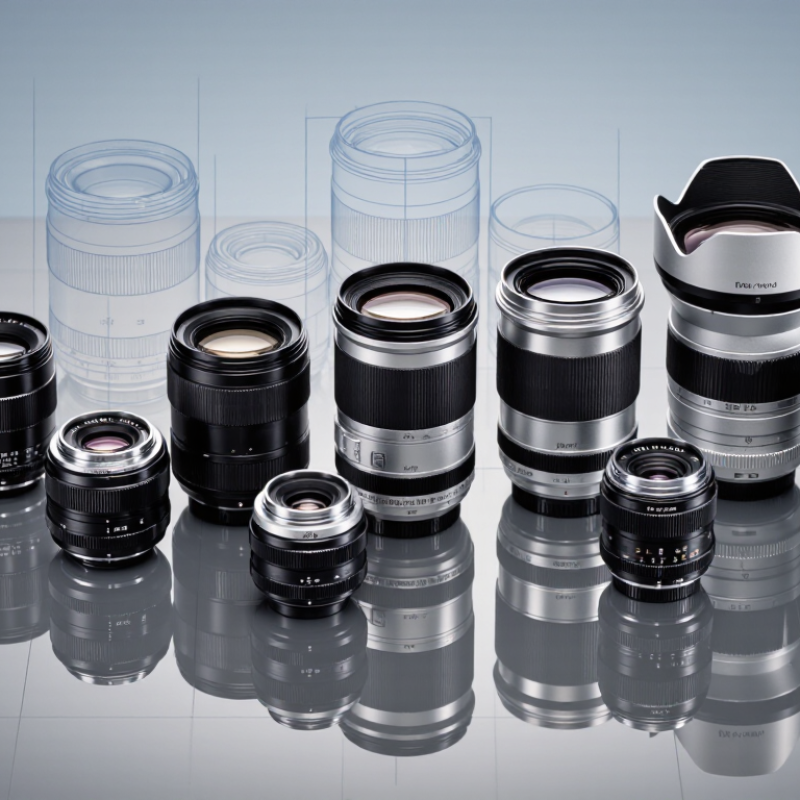
China Top 10 Wide Angle Lens Manufacturers

How Wide-Angle Lenses Are Defined and Classified

China Top 10 Wide Angle Lens Manufacturers
How Wide-Angle Lenses Are Defined and Classified

A wide-angle lens captures a broader scene than a standard lens. On a full-frame camera, lenses around 35 mm or shorter are commonly classed as wide-angle. A 24 mm lens covers roughly 84 degrees diagonally, while a 14 mm lens takes in much more. These figures describe angle of view, not just focal length. Sensor size matters: a 24 mm lens on a smaller sensor shows a narrower view. The boundary is useful, but not perfectly tidy.

Design also shapes classification. Rectilinear lenses keep straight architectural lines mostly straight, though edges may stretch. Fisheye lenses bend lines strongly to record an exceptionally broad view. Manufacturers may further classify products by focal length, maximum aperture, sensor coverage, and intended use. CIPA reported 7,726,962 digital camera shipments worldwide in 2023. This figure describes camera shipments, not wide-angle lens sales, but offers useful market context for lens makers.

Tips: Check the camera’s sensor format before comparing focal lengths. For interiors, inspect corner sharpness and distortion; for landscapes, test flare against bright sky. A specification sheet cannot show every real-world compromise. Evaluate sample images at the edges, too.


Why China Is a Major Hub for Wide-Angle Lens Manufacturing

China has become a major hub for wide-angle lens manufacturing through its dense network of optical suppliers, component makers, and assembly facilities. In many production districts, lens elements, metal housings, coatings, and packaging can be sourced within a relatively short distance. That proximity can reduce coordination delays and make design changes easier to test.

Wide-angle lenses demand careful control of distortion, edge sharpness, and coating consistency. Manufacturers can draw on experienced technicians and a broad range of production equipment, from precision grinding tools to optical inspection systems. A prototype may be checked against a test chart, then adjusted after engineers review corner detail or flare under strong light. Small changes matter. Still, equipment alone does not guarantee stable results. Process control and skilled inspection vary between factories, and high output can sometimes make inconsistencies harder to spot.

For buyers, China’s manufacturing base offers options across different specifications and order sizes. A useful evaluation includes sample testing, measurement records, and clear discussion of tolerances, rather than relying only on a catalogue or quoted price. Ask how the supplier checks distortion across the frame and handles coating defects. Factory conditions may look impressive, yet documentation can be incomplete or difficult to compare. That deserves a closer look. Reliable partnerships grow from repeatable measurements and candid answers about limitations.

How to Evaluate Wide-Angle Lens Manufacturers in China

When evaluating wide-angle lens manufacturers in China, request measured performance, not only catalog claims. Ask for MTF charts at the center and corners, plus distortion and vignetting results at each focal length. For a 12 mm lens, even small alignment errors can soften edge detail. Check how the factory controls element centering, coating consistency, and focus calibration across production batches. Useful evidence includes dated test records, sample counts, and clear pass/fail limits. A polished sample is not enough.


CIPA’s 2023 camera shipment statistics recorded 7,734,934 digital cameras shipped worldwide. This is not a lens-market measure, but it shows why suppliers need dependable output and repeatable quality. Ask manufacturers how they track yield, rework, and delivery performance; verify the figures against several months of records. Request multiple production samples, then compare corner sharpness and flare under the same lighting setup. Also review environmental test methods and material traceability. A supplier may have capable equipment yet weak process discipline. That deserves a second look. No factory is perfect, and honest explanations of failure rates can be more useful than flawless presentations.

Profiles of 10 Leading Wide-Angle Lens Manufacturers in China

Profiles of ten leading wide-angle lens manufacturers in China can reveal how differently suppliers approach the same optical challenge. One may emphasize compact lenses for inspection cameras, while another focuses on broader fields of view for security or industrial imaging. Their catalogs should be compared by focal length, aperture, sensor coverage, distortion control, and working distance. These details matter more than a general claim of “high precision.” Ask for sample images, optical drawings, and test conditions.

Manufacturing capability also deserves close attention. Lens grinding, coating consistency, alignment, and final assembly can affect edge sharpness and flare. A factory visit or a technical discussion may clarify how each supplier handles tolerances and production changes. Small details count. Check whether specifications include measured distortion and corner resolution, not only center performance. Profiles should also describe customization options, typical lead times, and quality checks, while distinguishing verified information from supplier statements. Some public profiles may leave gaps; that is worth noting, not hiding. Buyers should confirm performance with application-specific samples before committing to volume orders.

How to Choose a Manufacturer for Your Application and Requirements

China Top 10 Wide Angle Lens Manufacturers

Choosing a manufacturer starts with the image, not the catalog. Define the sensor size, field of view, working distance, and acceptable distortion for your application. A lens that captures a wide scene may still blur corners or create barrel distortion. For machine vision, check resolution across the full image circle and request test images using your own sensor. Small details matter.

MarketsandMarkets estimated the global machine vision market at USD 12.5 billion in 2023 and projected USD 17.2 billion by 2028. This forecast signals growing demand, but it does not guarantee a supplier’s lens will suit your setup. Compare measured resolution, distortion, coating options, temperature range, and available quality-control records. Ask how the manufacturer handles custom mounts and replacement parts. Then test samples under your actual lighting. A datasheet is useful, but it cannot show every edge case.

Tips: Send each candidate the same target chart and image conditions. Request MTF data at the center and corners, plus tolerances for focal length and back focal distance. Confirm lead times and sample-to-production consistency in writing. If the supplier avoids sharing test methods, pause. I would also leave room for one imperfect result: prototypes sometimes reveal a mounting or lighting issue you did not anticipate. That is worth learning early.

China Top 10 Wide Angle Lens Manufacturers - How to Choose a Manufacturer for Your Application and Requirements

Application-based comparison guide. These are representative lens categories, not a ranked list of named manufacturers. Focal lengths and compatibility depend on sensor size, image circle, and the complete optical design.

Application Representative Wide-Angle Configuration Sensor and Mount Considerations Key Requirements What to Request from a Supplier
Compact embedded cameras Typically about 1.8–4 mm; fixed-focus designs are common. Small-format sensors; M12 or board-level mounting is common. Confirm the active image circle and package clearance. Compact dimensions, stable focus, suitable chief-ray angle, and acceptable corner sharpness. Sensor-specific sample images, dimensional drawings, focus tolerance, and a measured resolution chart.
Security cameras Fixed or varifocal options; common examples include approximately 2.8–12 mm. Often designed for 1/2.8-inch or 1/1.8-inch-class sensors; C/CS or M12 mount options vary by product. Day/night performance, distortion control, back-focus compatibility, and reliable operation over the specified temperature range. Full-resolution sample images, spectral transmission data, mount tolerances, and operating-temperature test conditions.
Machine vision and factory inspection Fixed focal lengths commonly span roughly 6–25 mm for wide-field inspection setups. C-mount is common; match the lens image circle to the sensor format and pixel size. Consistent focus, low geometric distortion, edge-to-edge resolution, and repeatable production tolerances. MTF data, distortion measurements, working-distance guidance, and lot-to-lot inspection records.
Telecentric measurement systems Object-space telecentric designs are specified by magnification, often in the approximate 0.1×–2× range. Typically C-mount or a larger custom interface; sensor coverage and mechanical envelope must be checked. Low perspective error, controlled distortion, defined working distance, and adequate depth of field for measurement. Magnification tolerance, telecentricity specification, distortion data, working-distance drawing, and calibration method.
Automotive surround-view cameras Ultra-wide designs are commonly in the approximate 1.5–3 mm range, subject to the selected sensor format. Usually compact, fixed-focus assemblies; optical and mechanical interfaces are application-specific. Temperature stability, vibration resistance, low-light performance, and distortion suitable for calibration and image stitching. Environmental test reports, distortion maps, thermal focus data, and traceability to the required automotive qualification plan.
Fisheye and panoramic imaging Very short focal lengths; some designs target a 180-degree-class field of view on a specified image circle. Confirm the projection type, sensor diagonal, and whether the image is circular or fills the sensor frame. Defined field of view, controlled edge image quality, and a distortion model compatible with the intended software. Field-of-view definition, projection data, distortion coefficients, and sample images from the intended sensor.
Action cameras and compact recorders Compact wide-angle designs often use focal lengths of roughly 2–4 mm, depending on sensor size. Small sensors and short back-focus designs are common; check cover-glass and filter-stack compatibility. Low mass, impact-resistant construction, flare control, and acceptable corner performance at the intended aperture. Weight and envelope drawings, impact-test method, flare samples, and performance data with the specified sensor stack.
UAV and aerial imaging Wide-angle designs may use approximately 4–12 mm focal lengths, selected for the sensor and flight altitude. M12, C-mount, or custom mounts may be used; verify image-circle coverage and mechanical retention. Low weight, stable focus, useful corner resolution, and manageable distortion for mapping or stitching. Mass properties, vibration test information, calibrated distortion data, and image samples at the planned flight settings.
Door-entry and access-control devices Compact wide-angle or fisheye options are selected to cover the required doorway area. Small-format sensor matching and short mechanical depth are often important; confirm illumination compatibility. Reliable near-field focus, low-light performance, glare control, and adequate coverage at the installation height. Coverage examples at the intended mounting position, near-focus data, IR compatibility, and assembly drawings.
Larger-format industrial imaging Wide-angle options may fall around 12–24 mm, depending on the sensor format and required field of view. C-mount, F-mount, or other interfaces may be appropriate; verify image-circle coverage and flange distance. Coverage of the full sensor, consistent focus across the field, adequate aperture, and robust mechanical alignment. Image-circle specification, mount drawing, MTF or resolution data across the field, and production inspection criteria.

Before placing an order, provide the supplier with the sensor model or format, required field of view, working distance, aperture, operating environment, mount, and annual volume. Request a specification sheet and test samples, and confirm that all optical performance claims are measured using your intended sensor and assembly conditions.