Inquiry
Form loading...

How to Choose a Fulldome Projection System in 2026?

Choosing a Fulldome Projection system in 2026 requires more than comparing projector brightness or resolution. It requires evidence, room measurements, and a clear understanding of audience needs. As immersive-visualization researcher Paul Bourke has stated, “The dome is a very powerful medium for immersive visualisation.” That power depends on careful system design. A 10-meter dome with dark fabric, controlled ambient light, and accurate edge blending may outperform a larger venue with poor calibration.

Industry data shows strong demand for immersive display technologies. Grand View Research’s 2024 projection mapping report estimates the wider market at approximately US$4.7 billion in 2023, with substantial growth expected through 2030. AVIXA’s 2024 Industry Outlook and Trends Analysis also forecasts continued expansion across professional audiovisual solutions. These figures do not isolate Fulldome Projection, however. That limitation matters. Many market reports combine projection mapping, large-format displays, simulation, and immersive entertainment.

The practical decision should therefore begin with measurable criteria. Check lumen output after lens loss, not only the advertised rating. Test black levels inside the dome. Inspect a blended horizon for visible seams. Measure fan noise near seating areas. Confirm whether the media server supports real-time warping and current content formats. Ask about lamp replacement, laser lifetime, calibration tools, and local technical support. Budget for maintenance.

There is no universal winner.

A smaller system can deliver excellent immersion when optics and content are matched carefully. A premium installation can still disappoint when ventilation, geometry, or operator training is overlooked. The most reliable choice combines verified demonstrations, independent calculations, and a realistic five-year operating plan.

How to Choose a Fulldome Projection System in 2026?

What Is a Fulldome Projection System?

What Is a Fulldome Projection System?

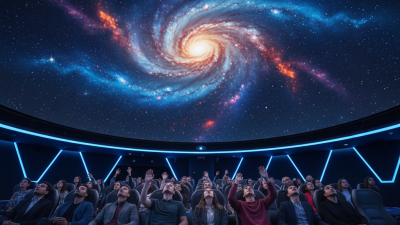
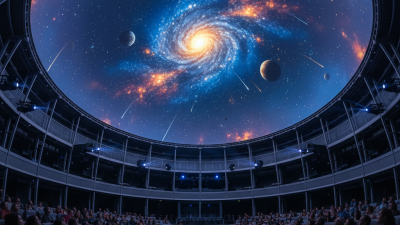
A fulldome projection system creates moving images across the inside of a curved dome. It combines projectors, lenses, a media server, calibrated content, and control software. The result surrounds viewers with visuals above, beside, and sometimes below their natural field of view.

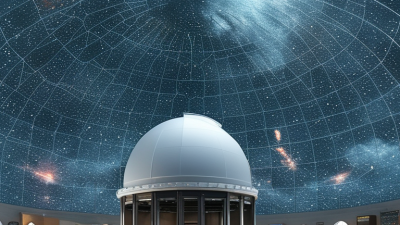
In practice, the dome surface matters as much as the projector. Its size, shape, coating, and viewing angle affect brightness and color accuracy. Multiple projectors may cover one dome, while edge-blending software joins their images. Careful calibration removes visible seams and keeps stars, planets, or landscapes aligned. Small errors can make a straight horizon look strangely broken.

A reliable system should provide stable brightness, suitable resolution, accurate geometry, and low playback delay. It also needs practical cooling, accessible filters, and regular maintenance. During real testing, operators should inspect dark scenes, fast movement, and detailed text. Black areas may appear gray because projectors cannot create perfect darkness. Dust can reduce clarity. A system may look excellent during installation but lose uniformity months later.

Content must match the dome’s perspective. Ordinary flat-screen video often feels distorted when adapted without proper warping. Experienced teams check the image from several seats, not only the control booth. They also measure brightness and color instead of trusting visual impressions alone. No system is flawless, and choosing one involves balancing immersion, maintenance effort, installation limits, and long-term operating costs.

How to Define Your Venue’s Projection Requirements

How to Choose a Fulldome Projection System in 2026? The answer begins with your venue, not the projector. Measure the dome’s diameter, springline height, viewing angles, throw distances, and available power. A 12-meter planetarium needs different coverage from a 30-meter immersive theater. Record these details on site. Memory is not reliable.

Define the image target in practical terms. For educational content, uniform brightness, readable text, and accurate color may matter most. For cinematic shows, contrast, motion handling, and edge blending become more important. AVIXA’s 2024 Industry Outlook forecasts the professional audiovisual market will grow from about 332 billion dollars in 2024 to 402 billion dollars by 2029. That growth suggests more choices, but not automatically better decisions. Ask for measured brightness across the dome, not a single center reading. There is a difference.

Content volume also changes the specification. PwC’s Global Entertainment and Media Outlook 2024–2028 projects continued growth in digital video and immersive entertainment spending. Your system may therefore serve live presentations, science programs, advertising, and interactive media. Check playback resolution, frame rates, media-server capacity, and future input formats. Include ambient light, ventilation, maintenance access, and alignment time. A technically impressive system can fail when cleaning requires closing the venue for two days. I have seen requirements evolve after installation, especially when operators discover that content creation costs exceed hardware costs. Leave upgrade paths, spare capacity, and honest compromises in the budget.

How to Compare Fulldome System Specifications

How to Choose a Fulldome Projection System in 2026?

Compare specifications under identical conditions. Brightness should mean measured light on the dome, not only the projector’s rated lumens. ISO 21118:2020 provides a recognized framework for projector light-output measurement, but installation geometry still matters. Record screen diameter, projection distance, lens angle, and usable image area. A 40,000-lumen system may appear weaker across a large, dark dome.

Resolution needs equal attention. Compare native pixel counts, edge blending, and image scaling. A system with higher resolution can still show soft stars after aggressive warping. Check refresh rate and latency during fast planetarium movement. Flicker often appears during motion, not on a paused test image.

Measure contrast with the actual dome surface and ambient lighting. Marketing values are rarely directly comparable.

AVIXA’s 2024 Industry Outlook projected the global professional AV market would reach approximately 325 billion dollars in 2024. That growth increases equipment choices, but not necessarily specification clarity. Request independent test conditions, calibration records, and thermal data. SMPTE engineering guidance also reinforces the importance of consistent image evaluation. Ask how brightness changes after prolonged operation. Small details matter.

I would test a dark star field, a bright Earth scene, and a moving horizon. Thirty minutes is not enough. Heat, fan noise, and alignment drift may appear later. A spreadsheet helps, but it cannot predict every seam.
How to Evaluate Installation, Content, and Compatibility

How to Choose a Fulldome Projection System in 2026?

A fulldome projection system should fit the room before it impresses the audience. Begin with a measured survey of the dome, viewing angles, entrances, and ceiling height. Record surface color, curvature, ambient light, and available electrical capacity. Small errors can create visible seams or uneven brightness. Check projector positions against maintenance access, not only the initial installation plan. Leave space for ventilation, replacement parts, and safe technician movement. It matters.

Content quality depends on more than resolution. Request sample scenes that match your planned shows, including stars, fast movement, dark gradients, and detailed maps. Test them inside the actual dome. A beautiful demo can hide poor edge blending. Review playback software, frame rates, audio timing, subtitles, and interactive control requirements. Confirm whether your team can create, edit, and schedule content without constant outside support. I once underestimated staff training time, and the launch became unnecessarily stressful.

Compatibility covers more than connecting cables. Map the system to existing computers, media servers, lighting controls, audio equipment, and network security policies. Check file formats, signal standards, synchronization methods, and future expansion options. Confirm performance at the intended resolution and frame rate, rather than relying on written specifications. Ask for documented calibration procedures and service response terms. Do not trust assumptions. Require a live acceptance test with your content, your operators, and realistic audience conditions. A flexible system may cost more initially, but limited compatibility can cost more later.

How to Plan the Budget, Maintenance, and Future Upgrades

How to Choose a Fulldome Projection System in 2026?

How to Plan the Budget, Maintenance, and Future Upgrades

A fulldome system should be budgeted as a long-term facility, not a collection of projectors. Start with room dimensions, dome material, audience capacity, and target brightness. Request measured performance data, including edge blending, color uniformity, resolution, and operating noise. A technical demonstration is more reliable than a sales specification sheet.

My own planning mistake was underestimating installation details. Cabling, ventilation, access platforms, calibration, and electrical upgrades can consume a surprising part of the budget. Keep at least 10 to 15 percent for unexpected work. Also price annual maintenance, cleaning, software support, replacement components, and staff training. A cheaper system may cost more when downtime interrupts scheduled shows.

Plan upgrades before purchasing. Choose processing equipment with scalable outputs, current network standards, and sufficient computing headroom. Leave physical space for additional projectors or revised cooling.

Keep a documented calibration profile and spare critical components onsite. That reduces recovery time.

Maintenance needs discipline.

Inspect filters, airflow, lenses, and mounting hardware on a fixed schedule. Record brightness and color changes every few months. These records reveal gradual failures before visitors notice them.

However, maintenance plans are never perfect. Dust levels, humidity, and staff experience can change quickly. Review the budget annually, and revise assumptions using real operating data rather than optimistic forecasts.