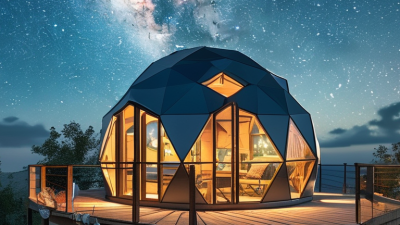
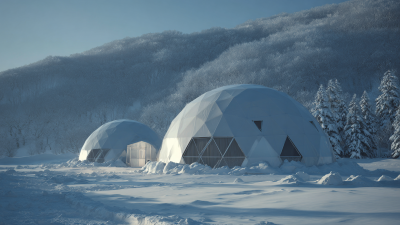
Top Observatory Dome House Manufacturers Worldwide
Choosing an Observatory Dome House manufacturer requires more than comparing prices or attractive renderings. Buyers must examine structural engineering, weather resistance, optical performance, insulation, automation, and after-sales support. These details determine whether a dome remains comfortable and reliable after years of sun, rain, snow, and strong winds.
Dr. Gernot Minke, an internationally recognized researcher in dome construction, has said, “The dome is a very stable structure.” His observation explains why curved buildings continue to attract observatories, hospitality developers, private astronomers, and experimental housing designers. A well-engineered shell can distribute loads efficiently, while a rotating roof can create a clear view of the sky. However, geometry alone is not enough. Poor ventilation, weak seals, noisy motors, or unsuitable glazing can quickly reduce the experience.
This guide reviews leading Observatory Dome House manufacturers worldwide through practical criteria. It considers material quality, customization, manufacturing experience, installation capability, maintenance access, and documented project performance. Some companies excel in compact residential domes. Others specialize in professional observatory systems. A few offer both, but their capabilities may differ significantly. No ranking is perfect. Regional climate, shipping conditions, local construction standards, and customer expectations can change the final choice. Readers should verify certifications, request technical drawings, inspect completed projects, and clarify warranty coverage before signing an order. The best manufacturer is not always the largest. It is the one that understands the site, the telescope, and the people living beneath the dome.
Defining Observatory Dome Houses and Their Main Applications
Top Observatory Dome House Manufacturers Worldwide
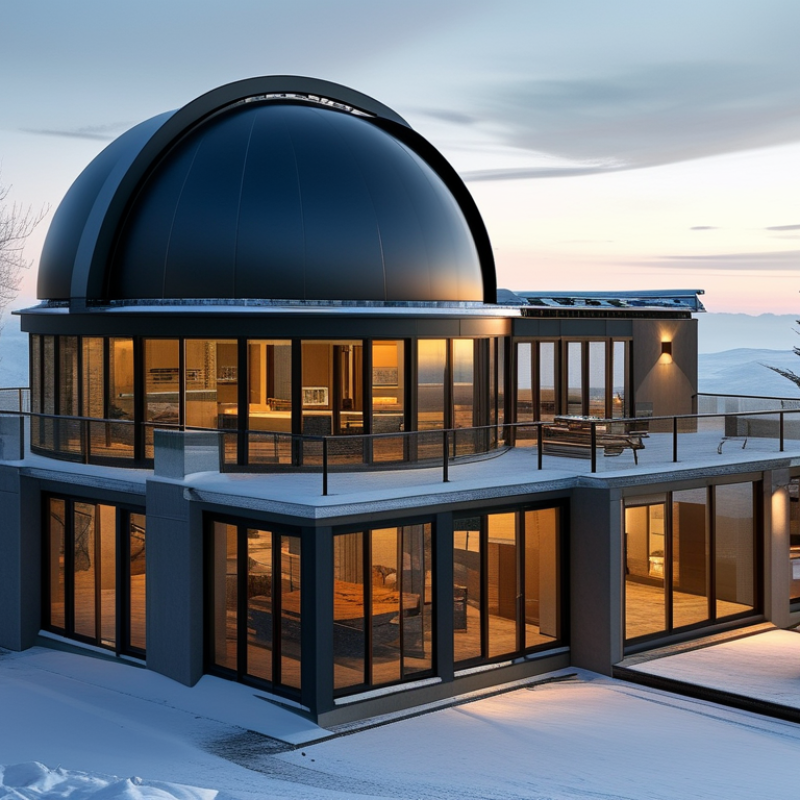
An observatory dome house combines a protective dome with an interior designed for observation, work, or living. Unlike a decorative geodesic home, it usually includes a controlled viewing opening, stable equipment points, and effective ventilation. Some domes rotate, while others use fixed shutters aimed at a selected section of sky. The structure must resist wind, rain, snow, heat, and dust without disturbing optical alignment. That distinction matters.
Its main application is astronomical observation. Private users may install a telescope room for planetary viewing, astrophotography, or basic sky education. Schools and science centers use larger models for supervised demonstrations and public learning. Research facilities require stricter vibration control, thermal management, cable routing, and precise shutter movement. Some hospitality projects also integrate dome rooms, but comfort should not replace safe access, weather protection, or dark-sky planning.
A well-designed dome house can support remote monitoring, environmental instruments, and limited laboratory work. Site conditions determine the best solution. Coastal air demands corrosion-resistant components, while snowy regions need stronger structural calculations and reliable drainage. Interior lighting should remain low and controlled. Visibility matters. Design flaws show.
Manufacturers should provide tested load data, installation guidance, maintenance procedures, and clear warranty terms. They should also explain limitations honestly. A rotating dome is not automatically better; motors require power, servicing, and emergency operation. Even experienced project teams can underestimate condensation or nighttime heat loss. Careful surveys, professional engineering, and practical user training make the finished observatory more dependable.
Key Design Features and Manufacturing Technologies
Top Observatory Dome House Manufacturers Worldwide
Key Design Features and Manufacturing Technologies
Leading observatory dome house manufacturers now combine architectural precision with telescope-grade movement systems. A rotating dome commonly uses curved aluminum ribs, insulated composite panels, and sealed tracks. CNC-cut components improve dimensional consistency, although site installation can still introduce errors. That practical gap deserves attention.
Low-emissivity glazing limits winter heat loss while adjustable shading reduces summer solar gain. This matters because the United Nations Environment Programme’s 2023 Global Status Report attributes 34% of global energy demand to buildings. Manufacturers increasingly use BIM coordination, robotic welding, and factory-controlled insulation to reduce thermal bridges.
McKinsey’s construction analysis indicates that modular methods can reduce project schedules by 20% to 50%, but transportation limits may reduce those gains for remote observatory homes.
Weather performance requires more than a striking silhouette. Continuous membranes, stainless fasteners, and tested drainage channels help protect the dome during wind-driven rain. Motorized shutters should include manual override systems and obstruction sensors.
Safety first.
Energy models should also evaluate telescope equipment, ventilation, humidity, and night-time occupancy together. ISO 19650-based information management can improve coordination among designers, fabricators, and installers. However, many projects still rely on incomplete site measurements. Manufacturers should record assembly tolerances, maintenance intervals, and real operating data, rather than depending only on laboratory assumptions.
Leading Observatory Dome House Manufacturers by Global Region
Top Observatory Dome House Manufacturers Worldwide
Leading Observatory Dome House Manufacturers by Global Region
Regional manufacturing matters when choosing an observatory dome house. Climate, transport distance, and local building standards can change the real cost. Grand View Research valued the global modular construction market at about USD 91.7 billion in 2023. Its forecast also indicates steady growth through 2030. This supports wider demand for factory-built, adaptable structures, including dome-based accommodation.
European manufacturers often focus on thermal insulation, snow-load engineering, and compact installation. North American suppliers commonly offer larger floor plans and integrated smart controls. Asian producers may provide competitive factory pricing, but buyers should verify steel grades, glazing specifications, and corrosion protection. In Oceania, salt air and strong winds require careful coastal detailing. UN Tourism reported that international arrivals recovered to nearly 99% of 2019 levels in 2024. That recovery is encouraging for observatory lodging, although remote-site access remains a practical weakness.
Tips: Request regional test reports, not only attractive renderings. Confirm U-value, wind resistance, snow load, fire performance, warranty limits, and replacement-glass availability. Ask for a delivered installation quote. Factory price is not the final price. A sample nighttime visit can reveal condensation, glare, and uncomfortable heat. I would also compare two suppliers after heavy rain; marketing rarely shows drainage problems.
How to Compare Quality, Customization, and Installation Services
Comparing observatory dome house manufacturers requires more than viewing polished photographs. Check material certificates, structural calculations, and factory inspection records. ASTM and ISO-based testing should cover weather resistance, air leakage, corrosion, and rotating mechanism durability. Ask for the dome’s tested wind and snow loads, not only its advertised limits. A small seal failure can create condensation around the telescope platform.
Customization should be measured in drawings and tolerances. Confirm the clear opening, shutter travel, equipment loads, insulation thickness, and cable routes before signing. The International Energy Agency reported that buildings and construction represented about 37% of global energy-related emissions in 2022. Therefore, thermal bridges around curved panels deserve serious attention. A low U-value on paper may change after joints, motors, and fasteners are installed. This is where some comparisons become uncomfortable.
Installation service often separates experienced manufacturers from ordinary fabricators. McKinsey research on modular construction indicates potential schedule reductions of 20% to 50%, but coordination remains critical. Require a site survey, foundation interface drawings, lifting plans, commissioning records, and operator training. Ask who handles rain testing and alignment after installation. A practical inspection includes opening the shutter during strong wind, checking motor noise, and observing water drainage. No supplier is flawless. Even a careful team may underestimate local access, crane clearance, or nighttime temperature changes. That risk should appear in the contract, with response times and replacement responsibilities clearly defined.
Industry Trends Shaping the Future of Observatory Dome Houses
Observatory dome house manufacturers worldwide are redesigning their products around comfort, efficiency, and reliable sky access. The strongest shift is toward insulated composite panels, low-emissivity glazing, and tighter weather seals. These features reduce heat loss during cold nights and limit condensation near sensitive equipment. A motorized rotating roof now works with quieter drives and automatic rain sensors. This matters when sudden weather changes interrupt observation. Quiet operation counts.
Energy management is becoming equally important. Many manufacturers combine rooftop solar systems with battery storage and efficient heat pumps. Smart controls can adjust ventilation, shading, and interior temperature from a mobile device. However, automation should not replace practical inspection. Sensors can fail, batteries age, and poorly calibrated systems may create false confidence. Experienced installers still test drainage, emergency stops, cable routing, and structural movement on site. Independent engineering reviews also help confirm resistance to wind, snow, and seismic loads under local building requirements.
Modular construction is another growing trend. Factory-built wall sections can shorten installation time and improve consistency between projects. Some manufacturers are developing compact dome houses for private observers, schools, and remote research stations. Accessibility is receiving more attention, including wider entrances, stable flooring, and controls placed at reachable heights. Yet customization remains difficult. A design optimized for a dry plateau may perform poorly in a humid coastal climate. Manufacturers need clearer maintenance guidance and longer real-world testing. The industry is advancing, but field experience should challenge attractive specifications.