Choosing the right planetarium requires more than comparing dome sizes and projector prices. Global buyers must assess room dimensions, visitor capacity, climate, maintenance access, software compatibility, and local installation support. A reliable system should create clear stars, accurate motion, comfortable sound, and safe visitor flow. These details shape the experience every night.
This guide examines ten leading hybrid planetarium types for schools, museums, science centers, resorts, and mobile education programs. The term “Hybird Planetarium” also appears in international searches, although “Hybrid Planetarium” is the standard spelling. Each type combines digital projection with different optical, mechanical, architectural, or portable features. The comparison considers image quality, immersive performance, operating cost, scalability, and practical service needs.
Look beyond impressive demonstrations.
A bright showroom image may hide difficult calibration, weak ventilation, or expensive replacement parts. Buyers should request technical drawings, verified brightness data, warranty terms, training plans, and references from operating venues. Regional humidity, ceiling height, shipping conditions, and power stability can change the final decision. Experience from real installations often reveals problems that brochures omit.
No single design suits every market. A compact classroom dome may outperform a larger system when staffing and space are limited. Conversely, a public science center may need stronger hardware, greater seating capacity, and scheduled maintenance support. The following overview offers a practical starting point, while encouraging buyers to verify every specification with qualified suppliers and local professionals.
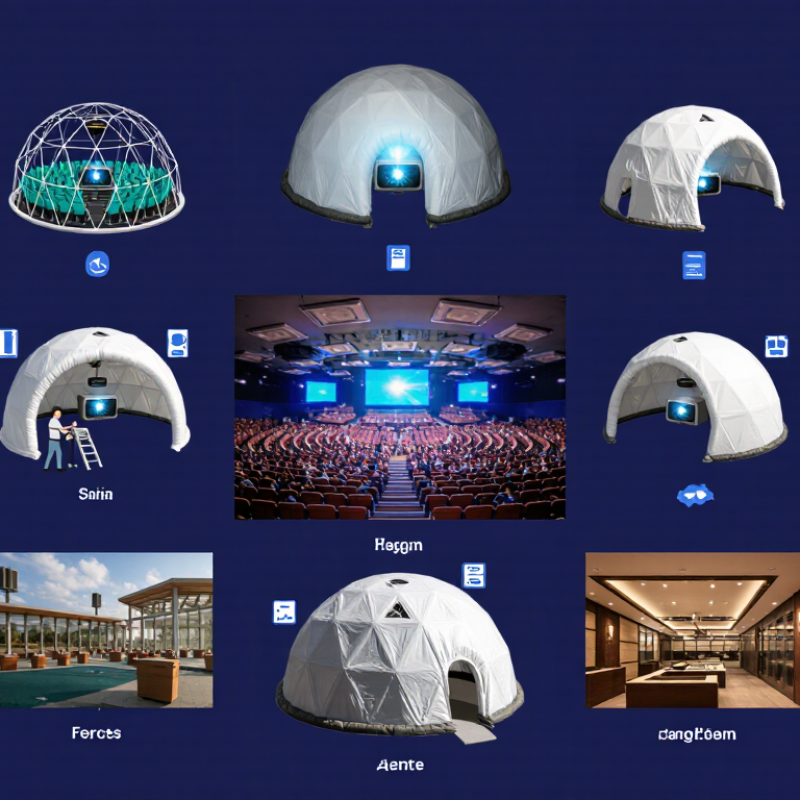
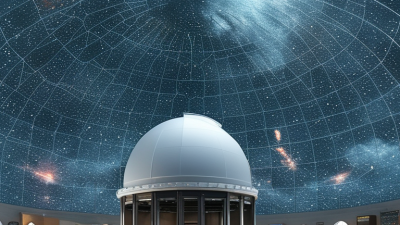
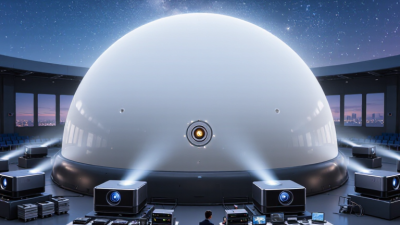
A hybrid planetarium combines physical sky-mejection hardware with digital full-dome imaging. It may use an optical star projector, LED panels, or synchronized projection engines. The dome becomes a shared visual field. Operators can display accurate stars, planetary motion, satellite paths, or immersive science films. The ten leading configurations usually differ by dome structure, projection method, portability, and audience size.
Operation begins with a calibrated control system. It aligns image servers, lighting, audio, ventilation, and presenter controls. Optical equipment can preserve sharp star points. Digital systems add real-time simulation and wider content choices. According to IDC’s Worldwide AR/VR Spending Guide, global AR/VR spending was forecast to reach 50.9 billion dollars in 2026. That growth supports stronger digital layers, but it does not guarantee educational value.
A reliable installation needs measured brightness, low-latency playback, emergency access, and scheduled maintenance. UNESCO’s 2023 Global Education Monitoring Report found that only 16% of countries explicitly guarantee data privacy in education by law. This matters when hybrid venues collect visitor or classroom information. The boundary is not always clean. A system may look advanced, yet teach poorly. Operators still need astronomy expertise, tested lesson plans, and transparent content reviews. Some buyers also underestimate cooling, replacement parts, and staff training. Those gaps can quietly weaken long-term performance.

Hybrid planetariums combine optical star projectors with digital systems, creating realistic skies and flexible educational content. The main types include fixed-dome theaters, classroom domes, portable inflatable domes, mobile trailer units, and compact community systems. Each serves a different operating environment. Fixed domes suit museums and science centers with permanent visitor traffic. Classroom systems fit schools with limited floor space and smaller audiences.
Other available types include fulldome cinema systems, LED dome planetariums, projection-mapped rooms, mixed-reality planetariums, and research visualization theaters. Fulldome systems support astronomy lessons, cultural films, and live presentations. LED domes offer bright images and lower dependence on projection distance, but their installation costs can be substantial. Projection-mapped rooms may use existing walls, although image alignment requires careful calibration. Mixed-reality systems add interactive viewing, while research theaters prioritize accurate data display over entertainment.
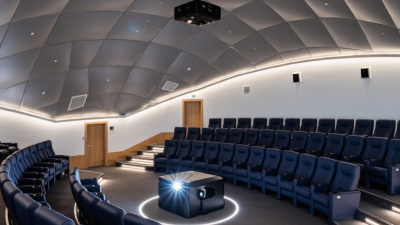
Buyers should examine dome diameter, projector brightness, resolution, ventilation, seating, and local power standards. A coastal site may need stronger moisture protection. A school may value quiet operation more than maximum image size. Ask for maintenance records and a live demonstration. Do not judge performance from brochures alone. A larger dome is not automatically better. Some systems advertise impressive features, yet staff may struggle to operate them. This is where practical training matters. Budget planning should include software updates, lamp or panel replacement, calibration, and technician access. The less glamorous details often determine long-term reliability.
Hybrid planetariums combine several display methods, creating flexible learning spaces for global buyers. A fixed digital dome uses synchronized projectors and spatial audio for astronomy lessons. An optical-mechanical hybrid adds a star projector for realistic points of light. A portable inflatable dome supports schools, exhibitions, and temporary events. A classroom mini dome fits smaller rooms and usually uses short-throw projection.
A full-dome theater delivers wide educational films and live presentations. An LED dome provides strong brightness, high contrast, and low maintenance, but its purchase cost can be substantial. An augmented-reality planetarium overlays digital labels on physical models, helping visitors compare planets and spacecraft. A virtual-reality-linked system gives small groups interactive missions, although shared viewing becomes more difficult. A museum hybrid combines projection, touch controls, and motion sensors for public engagement. A research visualization dome supports climate models, geology, navigation, and scientific data review.
Reliable systems need accurate calibration, heat management, safe access routes, and simple control software. Buyers should check resolution, brightness, dome diameter, acoustic treatment, and local service support. Content compatibility matters too. Open formats reduce future replacement pressure. Energy use deserves attention, especially in large venues.
No format is perfect. LED systems may feel less cinematic. Inflatable domes can suffer from wrinkles or airflow noise. Virtual reality can also cause discomfort for some visitors. A practical site test is essential before purchase. Speak with educators, technicians, and daily operators. Their experience often reveals problems that a specification sheet misses.
Top 10 Hybrid Planetarium Types for Global Buyers
How to Compare Hybrid Planetariums by Size, Cost, and Performance
Hybrid planetariums combine digital projection with optical or mechanical sky systems. The ten common formats include portable domes, classroom units, touring systems, fixed small domes, medium theaters, large theaters, optical-digital systems, immersive theaters, educational labs, and research-focused installations. Each type serves a different audience and operating schedule.
Start with dome diameter, seating capacity, and available room height. A portable dome may fit inside a school hall, while a large theater needs serious structural planning. Check projector brightness, resolution, contrast, sound coverage, and control software. A larger image is not automatically better. Poor calibration can make stars look uneven near the dome edge.
Compare the complete cost, not only the equipment quotation. Include shipping, installation, staff training, maintenance, replacement lamps, software updates, insurance, and energy use. Ask for measured performance data under realistic operating conditions. Request references from facilities with similar climate, visitor volume, and technical staff. Local service access matters more than attractive specifications. Sometimes, a simpler hybrid system performs better because operators can manage it confidently. My own comparison would still leave room for doubt, especially when suppliers use different test methods. Reviewers should record audience sightlines, setup time, noise levels, and downtime after live demonstrations. Small details become expensive later.
| Rank | Hybrid Planetarium Type | Typical Dome Diameter | Typical Seating Capacity | Hybrid Projection Configuration | Typical System Cost (USD) | Typical Installation Area | Visual Performance | Best-Fit Applications | Key Trade-Off |
|---|---|---|---|---|---|---|---|---|---|
| 1 | Portable Inflatable Hybrid Planetarium | 4–8 m | 20–70 visitors | Digital projector system combined with a compact star projector or star-field module | $25,000–$90,000 | 45–130 m² | Good for educational demonstrations; moderate brightness and contrast | Schools, museums, outreach programs, traveling exhibitions | Fast deployment and low cost, but limited seating, acoustic control, and image uniformity |
| 2 | Mobile Trailer Hybrid Planetarium | 6–10 m | 30–90 visitors | Portable digital fulldome projection with a compact optical or LED star-field system | $80,000–$250,000 | 70–180 m² including vehicle access | Good immersive coverage with practical mobile operation | Regional science outreach, rural education, public events | Transport and climate-control requirements increase operating costs |
| 3 | Compact Classroom Hybrid Planetarium | 6–9 m | 25–60 visitors | One to three digital projectors plus an integrated optical star projector | $100,000–$300,000 | 60–140 m² | Balanced educational image quality and accurate star presentation | Primary and secondary schools, training centers | Small footprint limits audience size and large-group programming |
| 4 | Small Museum Hybrid Planetarium | 8–12 m | 50–110 visitors | Multi-projector digital fulldome system with optical starball and automated show control | $250,000–$650,000 | 120–260 m² | High contrast, accurate star points, and strong educational versatility | Local museums, visitor centers, cultural venues | Requires controlled lighting, ventilation, and regular calibration |
| 5 | Mid-Size Community Hybrid Planetarium | 12–16 m | 100–220 visitors | Four to six digital projectors integrated with a precision optical star projector | $650,000–$1,500,000 | 250–500 m² | Strong immersive performance with reliable public-program capacity | Science centers, universities, municipal cultural facilities | Higher construction, staffing, and maintenance requirements |
| 6 | 4K Digital-Optical Hybrid Planetarium | 10–18 m | 80–260 visitors | 4K-class digital projection combined with an optical star projector for natural star fields | $700,000–$1,800,000 | 220–600 m² | Very high detail for scientific visualization, film, and simulation | Universities, science museums, premium educational venues | Higher content and calibration demands than standard HD systems |
| 7 | Large University Hybrid Planetarium | 16–22 m | 180–400 visitors | Multi-channel digital projection, optical star projector, and research-grade visualization control | $1,500,000–$3,500,000 | 500–950 m² | Excellent scientific accuracy, immersion, and multi-purpose capability | Universities, research institutions, astronomy departments | Needs specialist operators and a long-term technical support plan |
| 8 | Premium Immersive Hybrid Planetarium | 18–24 m | 250–500 visitors | High-resolution multi-projector dome, optical star projector, spatial audio, and show automation | $2,000,000–$5,000,000 | 700–1,300 m² | Excellent edge blending, brightness uniformity, color depth, and sound immersion | Major museums, destination attractions, national science centers | Capital cost and annual content licensing can be substantial |
| 9 | Large Civic Hybrid Planetarium | 20–28 m | 350–700 visitors | Large-format digital fulldome projection integrated with a high-precision optical star system | $3,500,000–$8,000,000 | 1,000–2,000 m² | High audience throughput with strong public-show and event performance | Public science centers, civic landmarks, large cultural complexes | Building acoustics, evacuation design, and seating geometry become critical |
| 10 | Research and Broadcast Hybrid Planetarium | 18–30 m | 150–600 visitors | Precision optical star projector, high-resolution digital visualization, tracking, simulation, and recording systems | $3,000,000–$10,000,000+ | 900–2,500 m² | Highest flexibility for research, simulation, education, and live production | Research campuses, national institutions, broadcast and production facilities | Complex integration requires specialist engineering and dedicated technical staff |
Cost ranges are indicative 2025–2026 global planning estimates for the core planetarium system, dome, projection, control, and typical installation. They exclude land, major building construction, taxes, shipping, custom seating, content production, and long-term service contracts. Actual performance depends on dome material, projector brightness, resolution, viewing angle, room light control, acoustics, calibration, and local installation standards.
Selection Criteria for Different Markets, Venues, and Audiences
Choosing a hybrid planetarium begins with the venue, not the projector. A school may need a compact digital dome, simple controls, and strong classroom integration. A science museum may prefer an immersive theater combining optical stars with high-resolution digital content. Portable systems suit rural outreach, temporary exhibitions, and markets with limited construction budgets. Fixed domes usually provide better seating, acoustics, and visitor flow.
Climate and building conditions can change the decision. In humid regions, buyers should check cooling capacity, dust protection, and maintenance access. In bright urban venues, contrast performance matters more than peak brightness alone. Measure ceiling height, emergency exits, power stability, and audience sightlines before comparing specifications. These details are less exciting, but they prevent expensive redesigns.
Audience behavior also shapes the right planetarium type. Young children benefit from short programs, durable seating, and clear narration. Universities may require accurate simulations, data visualization, and flexible teaching modes. Public venues often need multilingual content, accessibility features, and rapid program changes. Operators should request service response times, staff training, spare-parts plans, and documented calibration procedures. A low purchase price can hide difficult ownership costs. It happens often.
Buyer evaluations should include a live demonstration with local content and typical audience numbers. Ask how the system performs after extended operation, not only during a polished presentation. Some specifications look impressive on paper. They may disappoint in practice. Independent technical advice is valuable, especially when suppliers provide conflicting measurements.