Top Observatory Dome House Manufacturers for Global Buyers
Choosing an Observatory Dome House manufacturer is not simply a search for attractive photographs. Global buyers need evidence, technical clarity, and dependable support after delivery. The strongest manufacturers explain frame materials, insulation systems, acrylic or glass skylights, ventilation, drainage, and interior finishing without hiding limitations.
Buckminster Fuller, a geodesic-dome pioneer, once said, “You never change things by fighting the existing reality. To change something, build a new model that makes the existing model obsolete.” His words remain relevant to modern dome housing, where geometry can improve structural efficiency, natural light, and guest experience. However, clever design alone cannot guarantee a successful project.
Details matter.
This guide examines leading Observatory Dome House manufacturers through practical criteria. These include engineering documentation, factory quality control, customization, weather-performance testing, installation guidance, warranty terms, and international logistics. Buyers should also review wind and snow-load calculations for the building site. A beautiful dome may fail operationally if condensation, poor shading, or difficult maintenance was ignored during planning.
Manufacturer credibility deserves careful inspection. Look for completed projects, clear company information, responsive technical teams, and realistic delivery schedules. Certification requirements differ between countries, so local architects and engineers should verify the final design. This article cannot replace that professional review.
Some rankings may feel imperfect. Pricing changes quickly, and one supplier may excel in luxury interiors while another performs better in harsh climates. That is worth acknowledging. The best choice depends on location, budget, intended occupancy, and the buyer’s tolerance for customization, delays, and ongoing maintenance.
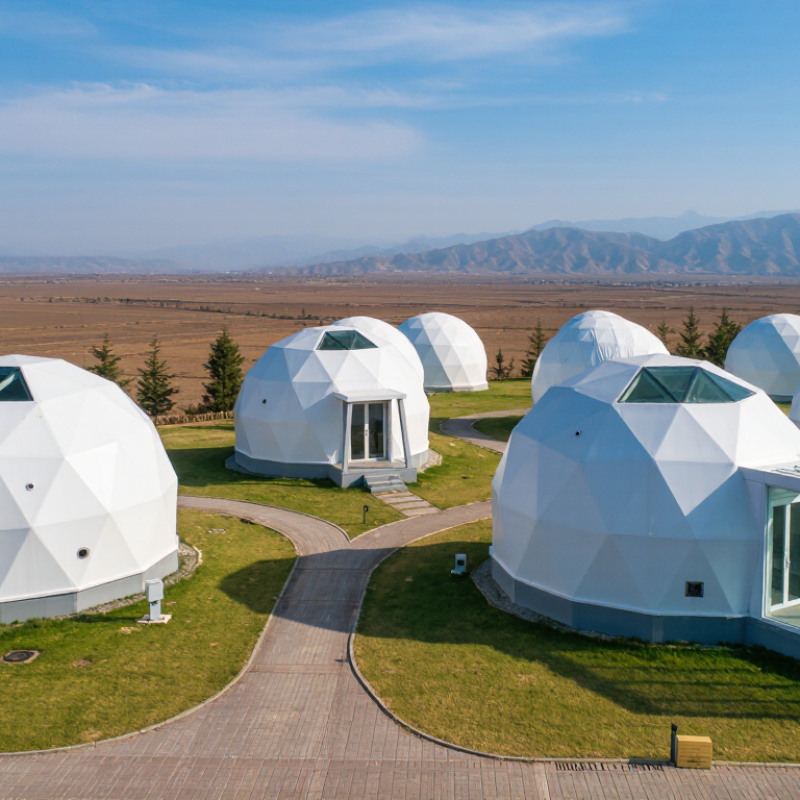
Market Definition: Observatory Dome Houses, Geodesic Types, and Global Demand
Top Observatory Dome House Manufacturers for Global Buyers
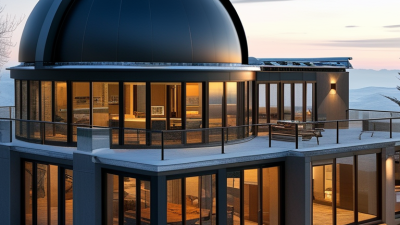
Observatory dome houses combine residential comfort with sky-viewing features. They may include panoramic glazing, roof openings, or rotating observation sections. The term “geodesic” describes the structure, not its complete function. Geodesic domes use triangular panels that distribute loads efficiently. However, not every dome is suitable for serious observation.
Global demand is growing among eco-resorts, private astronomy sites, educational centers, and remote retreats. Buyers often compare insulation, ventilation, wind resistance, and daylight control. Coastal projects need corrosion-resistant hardware. Cold regions require strong thermal breaks and snow-load calculations. Humid climates demand careful condensation management. Local building rules still matter. A beautiful concept can fail during permitting or shipping. That is an uncomfortable reality.
Tips:
Ask manufacturers for structural calculations, material certificates, installation drawings, and tested weather data. Confirm whether the roof opening protects equipment from rain and dust. Check replacement-panel availability before placing an international order. Request a detailed freight plan, including crate dimensions and unloading needs. Do not judge quality from renderings alone. A small prototype or factory inspection may reveal weak seals, awkward maintenance access, or poor acoustic performance. Experienced buyers also define the telescope size, interior use, and expected occupancy before comparing quotations. No design fits every climate.
Structural Criteria: 3V–6V Geodesic Designs, 360° Views, and Load Ratings
Top Observatory Dome House Manufacturers for Global Buyers
Structural Criteria: 3V–6V Geodesic Designs, 360° Views, and Load Ratings
Reliable observatory dome house manufacturers begin with structural clarity, not attractive renderings. A 3V geodesic design uses fewer, larger panels and simpler joints. It can reduce fabrication complexity. A 4V or 6V structure adds smaller triangles and greater geometric stiffness. However, more joints also mean more sealing points and inspection work.
Check the intended viewing angle carefully. A true 360° view requires an unobstructed roof, clear glazing, and a rotating or carefully aligned platform. Mullions, vents, and mechanical tracks can interrupt the view. Ask for measured sightline drawings, not only panoramic images. Confirm whether the dome rotates manually, electrically, or remains fixed. Small details matter.
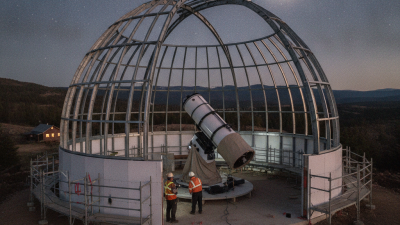
Load ratings must match the installation site. Request calculations for snow, wind, seismic activity, rain, and equipment weight. A telescope, insulated flooring, and interior fittings can add significant dead load. Manufacturers should provide material specifications, connection details, and local engineering review requirements. Field inspections often find water entering through poorly sealed joints. That weakness is easy to overlook. A higher geometric frequency does not automatically guarantee safety. Site anchoring, drainage, and maintenance remain decisive.
Some specifications may appear incomplete. That is a warning, not a minor inconvenience. Global buyers should compare tested performance with designed performance, because the two are not always identical. A practical supplier explains limitations plainly and revises drawings when assumptions change.
Geodesic Dome Design Comparison: 3V–6V Structural Complexity
The chart compares the theoretical number of triangular facets in complete Class I icosphere geometries.
A frequency of f produces 20f² triangular faces; practical dome panel counts vary with the selected opening, base ring, doors, windows, and structural system.
Higher-frequency designs generally create smaller triangles and more connection points, which can improve geometric refinement and support efficient load distribution.
Actual snow, wind, seismic, and occupancy load ratings are project-specific and must be verified through local structural engineering calculations.
A geodesic dome can provide a near-continuous panoramic envelope, but the final 360° viewing experience depends on glazing, framing, shading, and site orientation.
Climate Performance: 150+ km/h Wind Resistance and 1.5+ kPa Snow Loads
Top Observatory Dome House Manufacturers for Global Buyers
Climate Performance: 150+ km/h Wind Resistance and 1.5+ kPa Snow Loads
For global buyers, climate performance should guide every observatory dome house decision. A suitable structure must be engineered for wind speeds above 150 km/h and snow loads exceeding 1.5 kPa. These figures are not marketing decoration. They should connect to verified calculations, material specifications, and regional building requirements.
Experienced manufacturers typically assess dome geometry, frame strength, panel connections, anchoring, and foundation conditions together. A smooth dome can reduce wind pressure, but exposed ridges and coastal sites still demand careful design. Snow behavior also changes with slope, insulation, and local drifting patterns. One number never explains the whole risk.
Request structural reports, load assumptions, corrosion protection details, and installation records before comparing quotations. Ask whether testing reflects the completed dome, including windows, vents, observation equipment, and access doors. Small openings can become weak points during severe weather. Real sites are less tidy.
A credible supplier should explain its limitations clearly. Local engineers may need to review soil conditions, seismic exposure, drainage, and emergency access. A 1.5 kPa snow rating may not cover uneven snow accumulation. That assumption can fail. Buyers should also confirm inspection procedures after installation, because loose anchors or damaged seals can reduce long-term performance. Clear documentation, practical site experience, and honest technical communication offer stronger protection than impressive specifications alone.
Manufacturer Standards: ISO 9001, CE, EN 1090, ASTM, and Local Codes
For global observatory dome house buyers, certification should begin with evidence, not attractive renderings. The ISO Survey 2022 recorded 1,265,216 ISO 9001 certificates worldwide. This figure shows the standard’s broad adoption, but certification alone cannot prove structural competence. Ask for the current certificate, scope, audit body, and factory quality records. Check weld maps, material certificates, bolt grades, and coating thickness. Small details matter.
In Europe, EN 1090 supports factory production control for structural steel and aluminum components under construction-product rules. CE marking indicates declared conformity, not automatic safety or superior performance. A responsible manufacturer should provide the Declaration of Performance, execution class, welding qualifications, and load calculations. ASTM International publishes more than 12,000 technical standards, often supporting material, testing, corrosion, and fastener specifications. The exact ASTM reference must match the project design, not merely appear in a quotation.
Local codes still control the final installation. Wind uplift, snow load, seismic resistance, fire separation, drainage, and foundation anchorage vary by site. A dome tested in a dry climate may need different detailing near a coast. Manufacturers should coordinate with a licensed local engineer and provide calculation files in an accessible format. Some suppliers present incomplete documents. That is a warning, though not always proof of poor workmanship. Review assumptions carefully, because a beautiful dome can still hide a weak connection.
Global Purchasing: MOQ, 20-Foot Container Loading, Lead Time, and Warranty
Top Observatory Dome House Manufacturers for Global Buyers
For global buyers, MOQ, container fit, lead time, and warranty deserve more attention than showroom photos. A practical MOQ is often one complete dome for a pilot project, while larger orders may reduce tooling and packaging costs. Confirm whether the quoted unit includes the frame, glazing, interior shell, hardware, and installation kit. UNCTAD’s Review of Maritime Transport reports that maritime shipping carries over 80% of world merchandise by volume, so small documentation errors can create costly delays.
A standard 20-foot container offers roughly 33 cubic meters of internal space, but usable volume falls after protective crates and bracing. Ask for a loading diagram, package dimensions, gross weight, and container payload before placing an order. Two medium domes may fit, but curved panels and insulated modules can change the calculation. Typical factory lead times range from eight to sixteen weeks after drawing approval. This is not guaranteed. Confirm material availability, inspection timing, port cut-off dates, and the remedy for late delivery. Warranty terms should state coverage periods, exclusions, replacement procedures, and response times. The International Trade Centre stresses accurate product classification and trade documentation for smoother cross-border transactions.
Tips: Request a sample packing list and a signed production schedule. Check warranty claims through recent buyer references. Also, leave contingency time; weather and port congestion remain difficult to predict. A cheap quotation can become expensive.